

Characteristics of porous materials
Category: Industry Blog
2024-09-12
A porous material is a material having a network structure composed of interpenetrating or closed pores.
Compared with continuous media materials, porous materials generally have the advantages of low relative density, high specific strength, large specific surface area, light weight, sound insulation, heat insulation, and good permeability. Specifically, porous materials generally have the following six characteristics:
Mechanical properties
The application of porous materials can improve the mechanical properties such as strength and stiffness, while reducing the density, so that it has certain advantages in the aerospace industry. According to the calculation, if the aircraft uses porous materials, the weight of the aircraft will be reduced under the same performance conditions. to the original half. Another mechanical property change in porous material applications is an increase in impact toughness. The application in the automotive industry can effectively reduce the creative damage caused by traffic accidents to passengers.
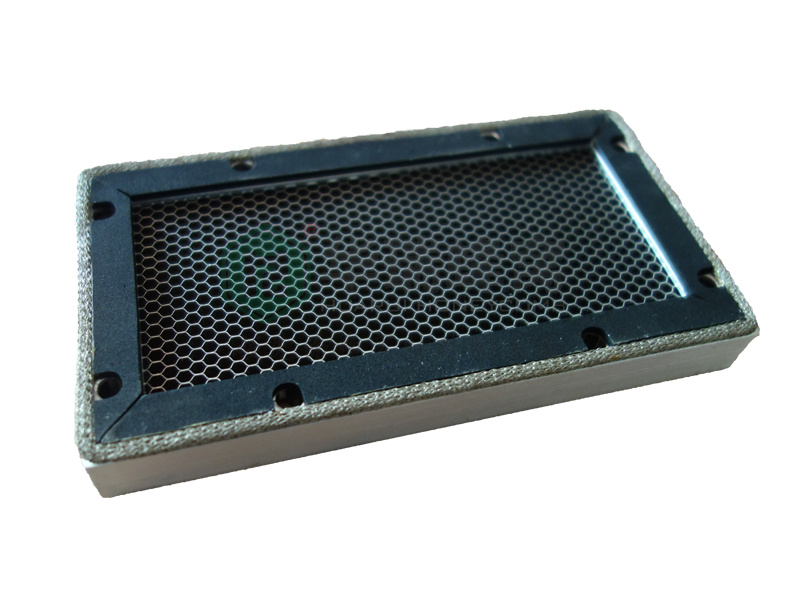
Transmission performance
When a wave travels to the interface of two media, reflection and refraction occur. Due to the presence of pores, the possibility of reflection and refraction is increased, and the possibility of diffraction is also increased. Thus, the porous material can act as a wave stop. Taking advantage of this property, the porous material can be used as a sound insulating material, a vibration damping material, and an explosion shock resistant material.
photoelectric performance
Porous materials have unique optical properties. Microporous silicon material can emit visible light under laser irradiation, which will become an ideal material for the manufacture of new optoelectronic components. The special photoelectric properties of porous materials can also produce porous electrodes for fuel cells, which are considered to be promising energy devices for the next generation of automobiles.
Permeability
Because people have been able to produce porous materials with regular pores and regular arrangements, and can control the size and direction of the pores. This property can be used to make molecular sieves, such as gas separation membranes, reusable special filtration devices, etc.
adsorption
Due to the different diameters of each gas or liquid molecule and the different degrees of freedom of movement, porous materials with different pore sizes have different adsorption capabilities for different gases or liquids. This feature can be used to produce gas or liquid separation membranes for air or water purification, which can even be reused.
Chemical Properties
As the density of the porous material decreases, the activity of the general material increases. Artificial enzymes based on porous materials with molecular recognition can greatly increase the speed of catalytic reactions.

这里是标题一h1占位文字

Business contact:
Mr. Wu: 15322054255
Miss Wang13827769412
Huarui Service Phone:0757-87653135
Enterprise E-mail:
Company Address:
Block 7, No.5, Lequn Avenue, Liping Town, Sanshui District, Foshan City


